They need concentrated calories because appetite tends to decrease, and sometimes the GI tract motility decreases. Gels and gatorade are perfect - quick, portable, easy. After a race, again, the athlete needs quick calories. High carbohydrate, low fiber items (bagel, banana, gatorade, bars, recovery drinks) are the best choices. A bit of protein is also helpful. Cold beverages can cool the body. Fluids with a 7% sugar solution allow for the fastest absorption.
 Like American races, Korean ones provide sustinence. However, many of the items seem to be based on culture and taste rather than on sports nutrition research. Also, it seems like Korean men like to "tough it out" and endure discomfort rather than rely on nutritional supplementation. Strange, but true. Perhaps the suffering is more honorable to Koreans? From what we've observed (after three years of the Korean triathlon scene, and, to some extent, the marathon scene) many Korean athletes know very little about sports nutrition.
Unfortunately for them, gels are very expensive. I probably wouldn't spent $2.50 for one gel either! Also, variety is extremely limited.
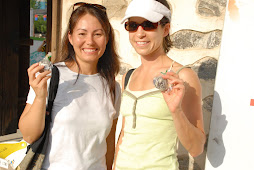
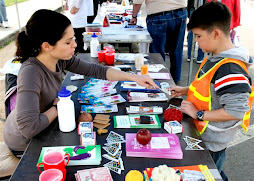
And now I digress for a moment to show you a food-related picture of a different sort. At the Gapyeong triathlon, the course was near a river. My friend's kids were throwing stones in the river and staring at a family on a picnic. The family was grilling squid and invited the kids to join them! The kids readily accepted, despite the language barrier. Koreans seem to love foreign kids.
 So...back to culture and tastes.
 One race day staple is the choco pie. For some reason, these high-fat, sugary cakes are standard issue items. I read somewhere that the Korean military gives choco pies to new soldiers after they've completed a portion of training. For that reason, choco pies are considered a comfort food. Perhaps they are psychologically (but not physically) nourishing. I've also seen cookies, crackers, and herbal drinks along courses.
 After races, watermelon soup is typically served via metal ladle by an ajumma. The soup contains watermelon chunks, juice, 7-up, and ice. Again, based on what I discussed earlier, this so-called soup is a poor recovery food. Hot green tea and coffee are also available, no matter the time of year. Athletes usually receive a free, boxed Korean meal too. Korean food can be tasty at the right times. Post race is not one of those times. Who can stomach spicy food on a hot day after a four hour race? Not to mention the fact that rice, oil, kimchi'i, and green leafy vegetables provide too much fiber, bulk, and fat. I guess that rice on its own would be okay, though.
Bananas and skinned, whole cucumbers are also available:
 I guess Koreans think that watery vegetables (fruits?) are the best recovery foods. Athletes do need water, after all. However, the 50 calories from a cucumber would probably not cover the energy needed to pick up and eat the thing! Not to mention the fact that it would be filling enough to reduce food consumption.
 In the next few years I imagine that Korea's sports nutrition companies will explode like Gatorade and Power Bar in the United States. The market is ripe for reasonably-priced (and nutritionally advantageous) products!


 (Above photo courtesy of Studio Sans)
 (Photo courtesy of A.Z.)


 As you can tell from the orange color, persimmon is an


 Literally, I had the fish. No bread basket, no side of vegetables, no potato option. A mound of scraggly vegetables and potato shavings blanketed the palm-sized portion.
  He was surprised to find the meat still on the bone! I found the plump bright-yellow yolk to be remarkable. Japanese hens must eat a rich diet!


 The ingredients - salmon, chicken, rice, vegetables, tofu, egg - were quite healthy. However, like most Japanese food, it was a bit salty, and the portions were small. I really think I would lose weight if I had to eat Japanese style. Fortunately, I ate both before and after our Japanese meals! I think I have a diet book in the making here.
 Because of our Japanese weekend, I was more open-minded about the food. I actually opened the bento box and tried the sweet rice cake. On our flight to Japan, I didn't even break the box seal!


 Note the fruit's sugar content. All fruit was labeled this way.
 In Japan, people bag their own groceries. Americans simply purchase too many groceries at one time for this method to work.