We never would have found this restaurant on our own. Fortunately, we happened to find the Sanchon food store on the main road. From there, we saw a sign for the restaurant.
 (Above photo courtesy of Studio Sans)
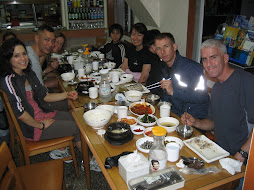
We removed our shoes at the entrance and placed them in cubbies. Then the hostess led us through this spacious area to our table:
 Sanchon serves a standard 20-dish meal for a reasonable 22,000W (about $15.20) at lunch. The menu varies according to season and revolves around Korean vegetables from the mountains or woods. We received a paper menu that listed the courses. The reverse side contained a New York Times article from 1986 about the place. According to the article, the owner was a Buddhist monk from age 14 to 32, where he learned the ins-and-outs of temple cooking.
 (Photo courtesy of A.Z.)
 Sanchon serves a standard 20-dish meal for a reasonable 22,000W (about $15.20) at lunch. The menu varies according to season and revolves around Korean vegetables from the mountains or woods. We received a paper menu that listed the courses. The reverse side contained a New York Times article from 1986 about the place. According to the article, the owner was a Buddhist monk from age 14 to 32, where he learned the ins-and-outs of temple cooking.
 Anyway, back to our lunch:
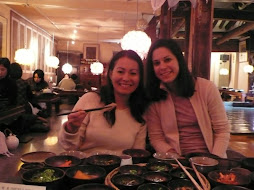
Before I could remove my coat, a server placed several dishes on our table. The bowls were made of a reddish-brown wood from the zelkova tree. (Traditionally a Buddhist monk carries a set of wooden bowls.)
(Photo courtesy of A.Z.)The appetizer, lower left, was a porridge of barley and vegetables. It tasted mild and refreshing. The bowl on the right contained winter kimchi. The watery broth was deceiving; the contents were quite spicy. (For my tastes, anyway!) The little vermicelli wraps contained radish, mushrooms, peppers and other vegetables. A dipping sauce added flavor. We had unlimited tea for beverage.
 Next came seven wild vegetables, each with their own seasonings. The center dish contained a mix of greens and tofu.
 Then the servers brought a slew of dishes. At left, lettuce with a tasty dressing and, at right, kimchi. In the back, another kimchi that my friends loved (and I spit out!)
 At top, a green vegetable that might have been cilantro. At left, a mildly sweetened mix of giant mushroom caps and a root vegetable. At right, a root that has been pounded and seasoned until edible.
 At left, fried kelp. What a great source of iodine, among other nutrients. At right, seasoned mushrooms.
 My friend served a stew of mushrooms, radish, and tofu.
  Noodles at left and fried seasonal vegetable pancakes at right.
 More fried food: seasonal vegetable fritters (lotus root, mushroom caps, and potato)
 Side view of a fritter. Fortunately the wooden chopsticks were much easier to use than the typical metal ones!
 The seasoned root and a mangled pancake.
 And, finally, a dessert of sticky rice pastry. The puffs were very light and chewy in the center.
 What an enjoyable and interesting meal. The variety of foods was pretty exhausting. I think I've had my fill of Buddhist vegetarian food for the time being!
 Next came seven wild vegetables, each with their own seasonings. The center dish contained a mix of greens and tofu.
 Then the servers brought a slew of dishes. At left, lettuce with a tasty dressing and, at right, kimchi. In the back, another kimchi that my friends loved (and I spit out!)
 At top, a green vegetable that might have been cilantro. At left, a mildly sweetened mix of giant mushroom caps and a root vegetable. At right, a root that has been pounded and seasoned until edible.
 At left, fried kelp. What a great source of iodine, among other nutrients. At right, seasoned mushrooms.
 My friend served a stew of mushrooms, radish, and tofu.
  Noodles at left and fried seasonal vegetable pancakes at right.
 More fried food: seasonal vegetable fritters (lotus root, mushroom caps, and potato)
 Side view of a fritter. Fortunately the wooden chopsticks were much easier to use than the typical metal ones!
 The seasoned root and a mangled pancake.
 And, finally, a dessert of sticky rice pastry. The puffs were very light and chewy in the center.
 What an enjoyable and interesting meal. The variety of foods was pretty exhausting. I think I've had my fill of Buddhist vegetarian food for the time being!
 Literally, I had the fish. No bread basket, no side of vegetables, no potato option. A mound of scraggly vegetables and potato shavings blanketed the palm-sized portion.
  He was surprised to find the meat still on the bone! I found the plump bright-yellow yolk to be remarkable. Japanese hens must eat a rich diet!


 The ingredients - salmon, chicken, rice, vegetables, tofu, egg - were quite healthy. However, like most Japanese food, it was a bit salty, and the portions were small. I really think I would lose weight if I had to eat Japanese style. Fortunately, I ate both before and after our Japanese meals! I think I have a diet book in the making here.
 Because of our Japanese weekend, I was more open-minded about the food. I actually opened the bento box and tried the sweet rice cake. On our flight to Japan, I didn't even break the box seal!
 Mr. Pizza even did a survey to determine women's favorite ingredients. He then created a speciality pizza with women's faves. Eric chose a dull-looking spaghetti plate:
 He called it "spaghetti from a can." The pickles added an interesting touch to the meal. Ironically, I chose the women's pizza before learning about Mr. Pizza's survey.
 The pizza was tasty in a spicy, flavorful Korean way. Fortunately, the "golden crust" referred to the sweet potato stuffed in the turtle skin. Delicious!